

New discoveries about fucoidan for type 2 diabetes
Many people wonder about fucoidan: is it sweet? Can diabetics use it? Actually, fucoidan not only doesn't raise blood sugar, but it also holds a key to regulating metabolism. A randomized, double-blind, controlled study published in *Yonago Acta Medica* systematically explored for the first time the effects of fucoidan on glucose metabolism, digestive system, and taste perception in patients with type 2 diabetes, providing a new direction for dietary intervention in diabetes.
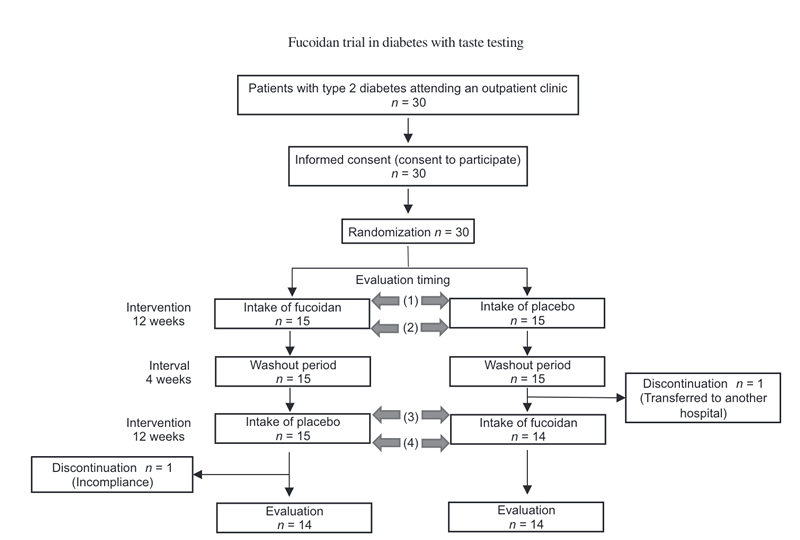
This study employed a crossover trial design, recruiting 30 patients with type 2 diabetes (22 men and 8 women) receiving only dietary therapy. Their ages were 59.10 ± 13.24 years, body mass index was 25.18 ± 3.88 kg/m², and glycated hemoglobin (HbA1c) was 7.04 ± 1.24%. Patients were randomly assigned to two groups. One group consumed 60 mL of a beverage containing 1620 mg of fucoidan daily for 12 weeks, followed by a placebo for 4 weeks. The other group received the opposite intervention. No adverse events occurred throughout the study, and 28 patients completed the trial. The study employed a multidimensional assessment: the filter paper disc method was used to detect the five basic taste thresholds (sweet, salty, sour, bitter, and umami); nutritional intake was recorded using a dietary questionnaire; and bowel movements, blood glucose levels, intestinal hormones, and other clinical and biochemical parameters were monitored to ensure the scientific validity and reliability of the results.
Key findings: Three major benefits of fucoidan
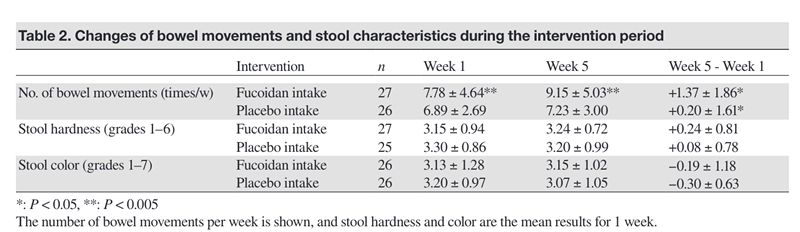
Improved Intestinal Motility and More Regular Bowel Movements: Research data showed that after fucoidan intake, patients' bowel movement frequency increased from 7.78±4.64 times/week in week 1 to 9.15±5.03 times/week in week 5 (P<0.001), with more significant improvements in lean body mass patients. In contrast, the placebo group only increased by 0.20±1.61 times/week, and the difference between the two groups was statistically significant (P<0.05). The core mechanism of this change lies in the fact that fucoidan, as a MAC (macrant available to gut microbiota), can be broken down by gut bacteria to produce organic acids, lowering the intestinal pH and thus promoting intestinal peristalsis. Simultaneously, the acidic environment can inhibit the growth of harmful bacteria and promote the proliferation of beneficial bacteria, optimizing the balance of the gut microbiota.
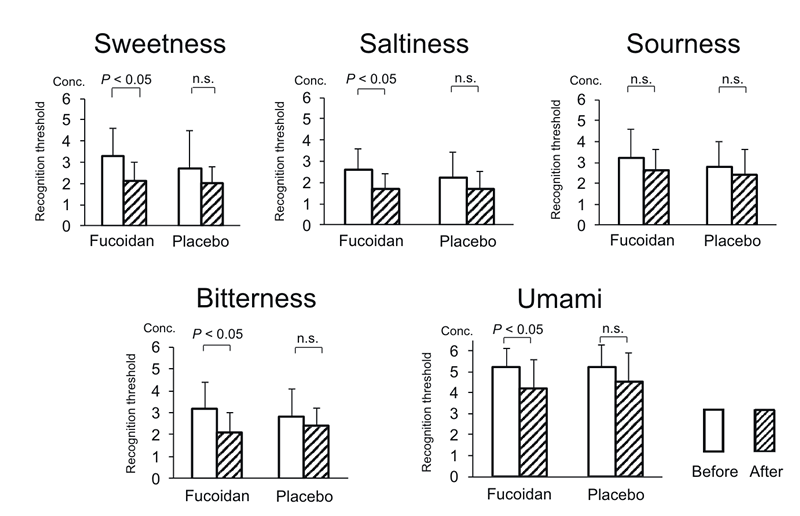
Enhancing taste sensitivity and improving palatability: Taste dysfunction is a common complication in diabetic patients. In this study, the sweet and sour taste thresholds of diabetic patients were significantly higher than those of healthy individuals (P<0.05). However, in the 11 patients with increased bowel movement frequency exceeding the mean, after fucoidan intervention, the recognition thresholds for sweet, salty, bitter, and umami tastes significantly decreased (P<0.05), and taste sensitivity was significantly enhanced, with only sour taste perception showing no significant change. This finding reveals a potential link between the gut environment and the taste system—taste receptors expressed by intestinal epithelial cells may regulate taste perception through the gut-brain axis, and fucoidan, by improving the gut environment, indirectly repairs the taste transmission pathway.
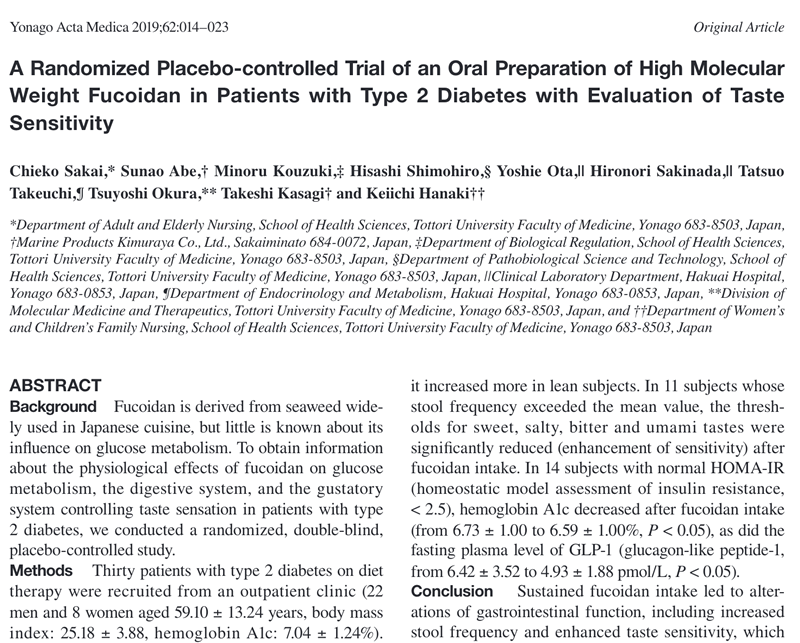
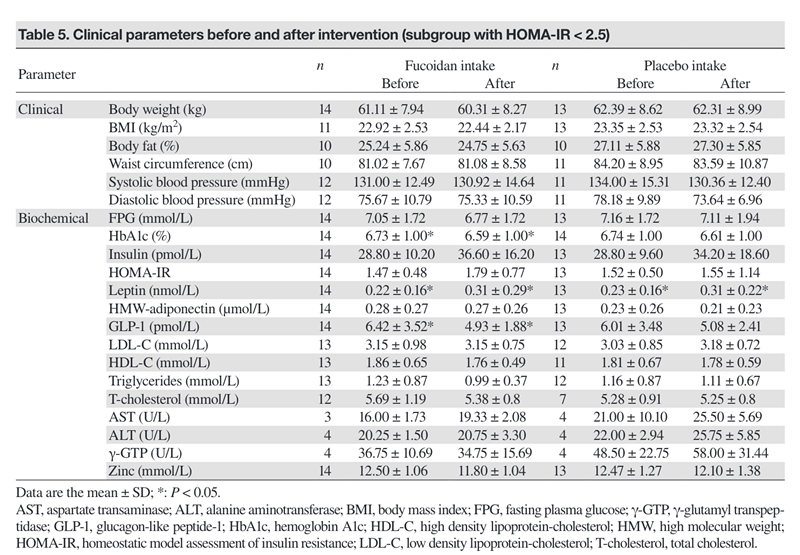
Studies have found that fucoidan's ability to improve glucose metabolism is population-specific: in 14 patients with a homeostasis model of insulin resistance (HOMA-IR) <2.5, after intervention, glycated hemoglobin decreased from 6.73±1.00% to 6.59±1.00% (P<0.05), and fasting plasma glucagon-like peptide-1 (GLP-1) levels decreased from 6.42±3.52 pmol/L to 4.93±1.88 pmol/L (P<0.05). GLP-1, as a key hormone secreted in the gut, can promote insulin secretion and inhibit glucagon release; moderate regulation of its levels may contribute to glycemic homeostasis.
Dietary insights for diabetic patients
1. A new natural dietary intervention option: As a natural water-soluble dietary fiber, fucoidan has no significant adverse reactions and can indirectly assist in blood sugar control by regulating intestinal function, making it particularly suitable for type 2 diabetes patients who cannot tolerate medication or wish to manage their condition through diet. The study also confirmed that long-term intake does not lead to a decrease in serum zinc and other mineral levels, demonstrating good safety.
2. Revealing the link between the gut and metabolism: This study is the first to demonstrate that fucoidan can improve the gut microbiota and simultaneously regulate taste sensitivity and glucose metabolism indicators, providing new evidence for the "gut microbiota-host metabolism" interaction mechanism. This suggests that taste abnormalities in diabetic patients may be related to gut environment disorders, and regulating gut health through dietary fiber may be a potential way to improve taste function.
3. Requires rational use based on individual circumstances: The study clearly shows that the blood sugar lowering effect of fucoidan is more significant in insulin-sensitive individuals, and the improvement in bowel frequency is more pronounced in lean body mass patients. This suggests that future applications should be combined with individual patient metabolic characteristics to achieve precise dietary intervention. For patients with type 2 diabetes, while fucoidan cannot replace standard dietary therapy and drug intervention, it can be incorporated into their daily diet as a high-quality source of dietary fiber. With further research, this natural component from seaweed is expected to become an important adjunct in the comprehensive management of diabetes, opening new avenues for dietary intervention in metabolic diseases.