Anti-inflammatory potential of fucoidan for atherosclerosis
Marine treasure - fucoidan: Combating atherosclerosis at its source and protecting vascular health
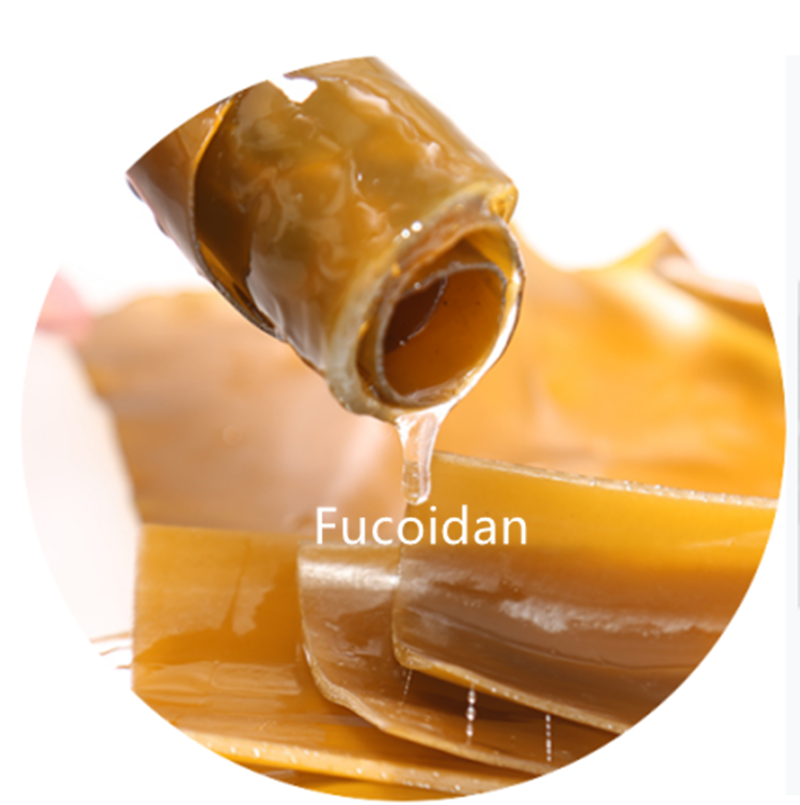
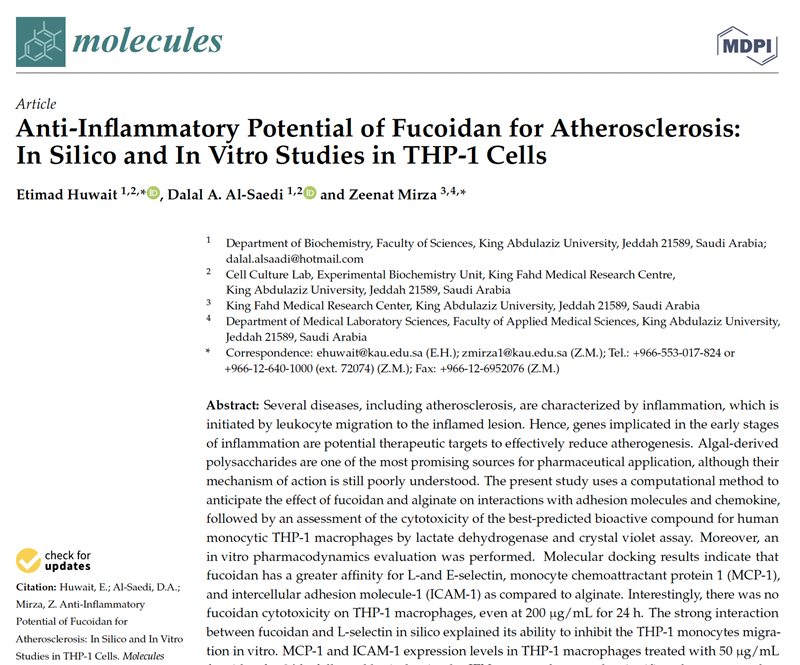
Cardiovascular disease has long been the leading cause of death worldwide, and atherosclerosis is the underlying culprit behind serious illnesses such as myocardial infarction and cerebral infarction. Many people believe that atherosclerosis is simply a buildup of blood lipids, but they overlook the fact that chronic inflammation is the core driver of vascular lesions. Fucoidan, derived from deep-sea brown algae, has become a recognized anti-inflammatory agent for blood vessels in the scientific community due to its natural polysaccharide activity. A recent authoritative study published in *Molecules*, through dual verification using computer simulations and cell experiments, revealed the core strength of fucoidan in intervening in atherosclerosis.
Inflammation: The "culprit" of atherosclerosis
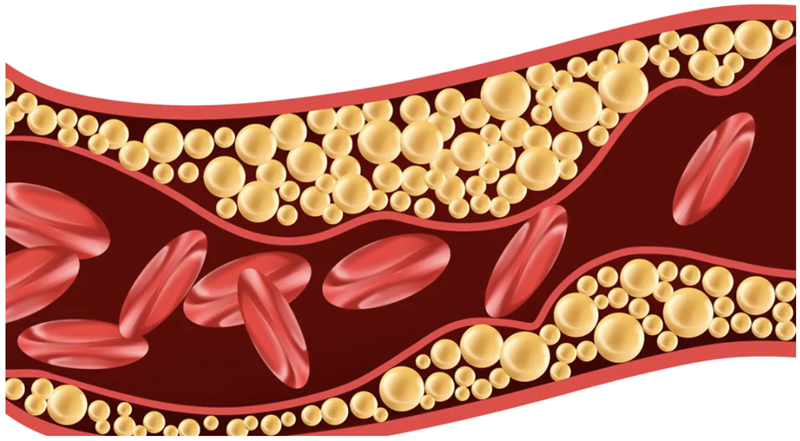
Blood vessels are like the body's pipes, and inflammation is the "rust source" that corrodes those pipes. The entire pathogenesis of atherosclerosis is fueled by inflammation. When the vascular endothelium is damaged, white blood cells rush to the damaged site following inflammatory signals. Through key adhesion molecules and chemokines such as L-selectin, E-selectin, MCP-1, and ICAM-1, they firmly adhere to the blood vessel wall, migrating and accumulating to gradually form lipid plaques. As these plaques grow larger and harder, they cause narrowing and blockage of blood vessels, ultimately leading to myocardial infarction and stroke. Simply put: inflammation initiates vascular damage, adhesion molecules accelerate plaque formation, and the key to preventing atherosclerosis is to block the inflammatory chain reaction at its source.
Scientific evidence confirms: Fucoidan precisely targets vascular inflammation
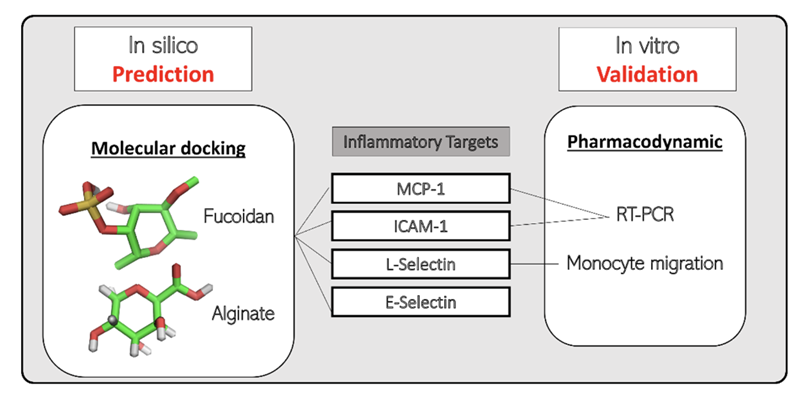
This study, employing computer-aided molecular docking and in vitro experiments with THP-1 macrophages, comprehensively compared the activity differences between fucoidan and alginate, yielding three key conclusions:
1. Targeted binding with affinity far exceeding that of ordinary polysaccharides
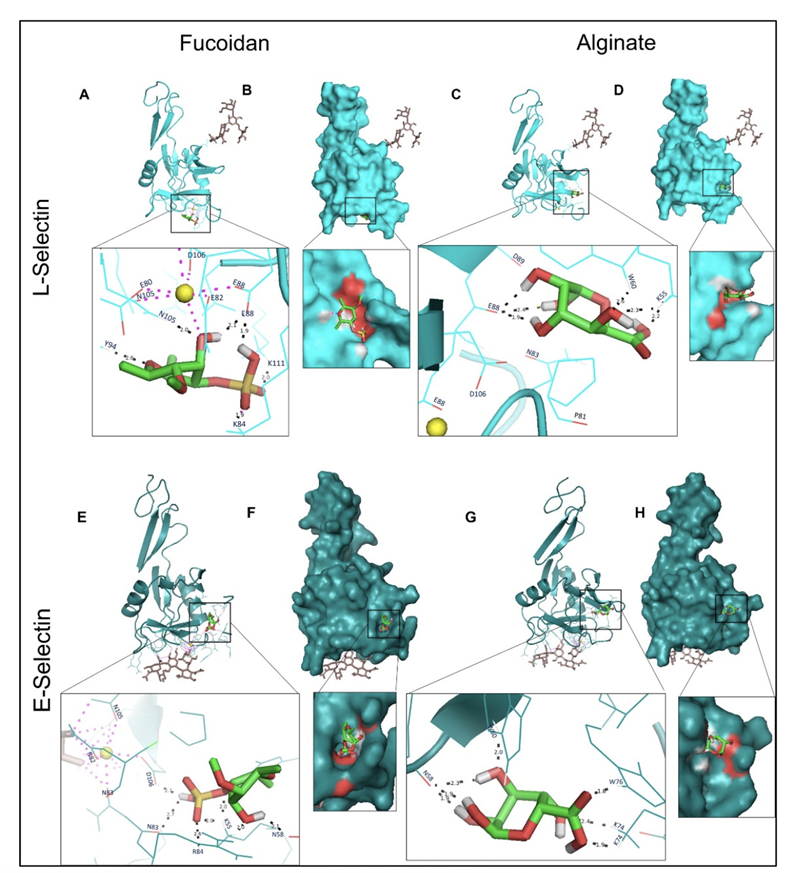
Research simulations have revealed that fucoidan binds to four core inflammatory targets—L-selectin, E-selectin, MCP-1, and ICAM-1—far more strongly than alginate. Leveraging its unique negatively charged sulfate group, fucoidan can firmly lock onto inflammatory proteins through hydrogen bonds and calcium ion coordination, seizing active sites and preventing the transmission of inflammatory signals.
2. Safe and non-toxic, even at high doses, it does not harm cells
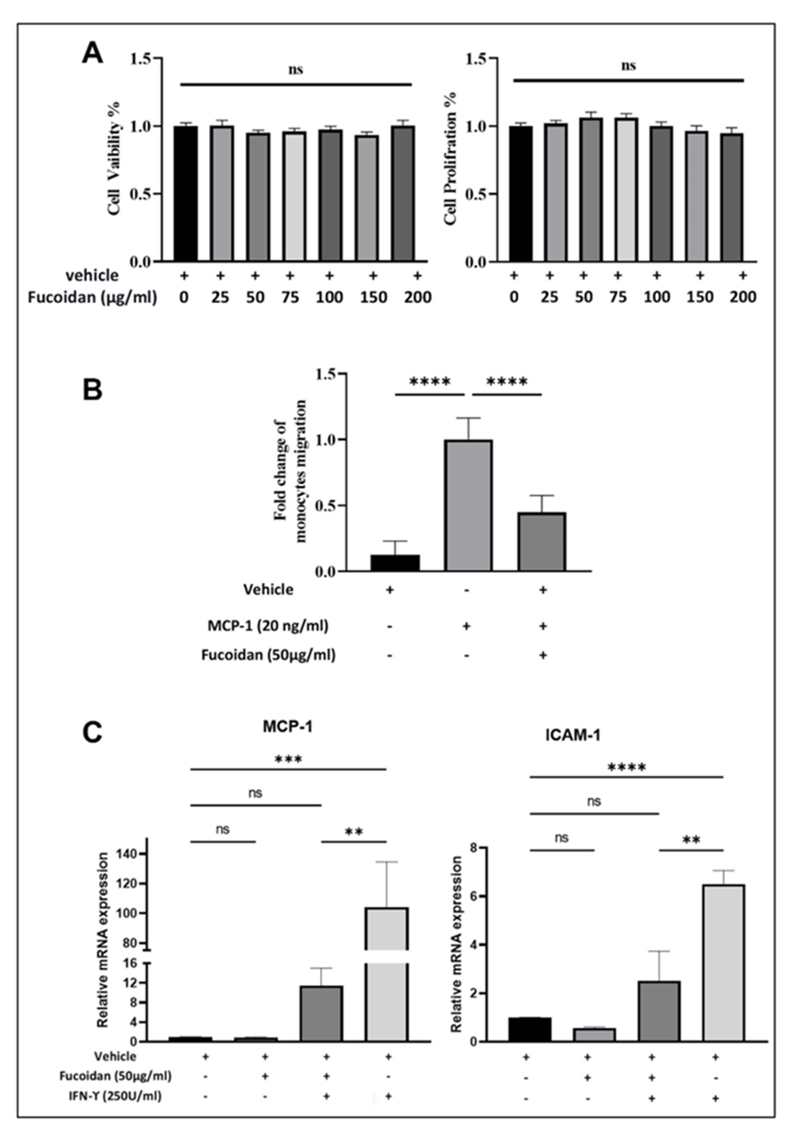
Experiments have shown that even at concentrations as high as 200 μg/mL, fucoidan has no cytotoxicity to human mononuclear macrophages, exhibiting mild compatibility with the human cellular environment and laying a safe foundation for long-term vascular health. Research ultimately selected 50 μg/mL as the optimal concentration, balancing efficacy and safety.
3. Dual inhibition, blocking monocyte migration and inflammatory expression
On the one hand, fucoidan can reduce the migration rate of monocytes by 50%, directly reducing the aggregation of inflammatory cells to the blood vessel wall; on the other hand, it can strongly downregulate the expression of inflammatory genes, downregulating MCP-1 expression by 8 times and ICAM-1 expression by 4 times, suppressing the outbreak of vascular inflammation at the gene level.
Stand out! The four core advantages of fucoidan
As a polysaccharide derived from seaweed, fucoidan is a preferred choice for combating atherosclerosis, with irreplaceable core advantages:
✅ Unique structure, stronger targeting: Rich in sulfated fucose, its negatively charged nature allows for precise binding to vascular inflammatory markers through electrostatic interactions. This results in a more stable and precise binding compared to ordinary seaweed polysaccharides, cutting off inflammatory adhesion pathways at their source.
✅ Multi-target synergistic effect, comprehensive vascular protection: It doesn't just lower lipids but simultaneously acts on both adhesion molecules and chemokine pathways. It inhibits the adhesion and migration of inflammatory cells and suppresses the overexpression of inflammatory genes, forming a triple protection of "anti-adhesion, inflammation control, and vascular stabilization."
✅ Natural and highly safe, suitable for long-term maintenance: Extracted from pure marine brown algae, it has no cytotoxicity or side effects, good water solubility, and high bioavailability, meeting the characteristics of oral natural active substances. It is suitable for long-term daily maintenance for middle-aged and elderly people, and those with hyperlipidemia.
✅ Backed by solid scientific research, with a clear and reliable mechanism, and dual verification through computer simulation prediction and in vitro cell experiments, its pathways of action, effective concentrations, and molecular mechanisms are all supported by clear data. Unlike ordinary conceptual health supplements, its efficacy is more scientifically based. Vascular health is not about waiting for plaque to form before taking action, but about proactively blocking inflammation and protecting endothelial health. Fucoidan, derived from the deep sea, leverages its natural activity and is supported by scientific data to combat atherosclerosis at its source, building a natural protective wall for cardiovascular health.